
Accepted Workshops
IEEE RFID 2026 is excited to host several interactive workshops on emerging topics within the field of RFID technology that aim to educate and create dialogue between researchers, industry professionals, and students. Make sure to register for and attend IEEE RFID 2026 to participate in these amazing workshops!
List of Approved Workshops :
Workshop #1: RFID Reader Design: A Deep Dive into Echo Cancellation in the GS1 Gen2 Protocol
Organizers: Alpaslan Demir (Zebra Technologies, USA), Rhonda Green (Zebra Technologies, USA)
Covered Topics: Introduction to RFID systems, reader architecture, backscattering concept/antenna mismatch, cascaded receive chain noise figure, mixers constraints, basics of GS1 Gen2V3 protocol (including power ramp)
This intensive one-hour workshop provides a focused look at a critical challenge in modern RFID reader design: echo cancellation. We will quickly cover the fundamentals of RFID reader architecture and backscattering before diving into the core trade-offs between in-chip and external echo cancellation methods. The session will also touch upon key aspects of the GS1 Gen2 protocol, such as power ramp requirements, and conclude with a brief demonstration and Q&A.

Alpaslan Demir (Senior Member, IEEE) is a Senior Manager of Systems Engineering at Zebra Technologies, where he leads RFID Reader Product Design and Development. With over 25 years of experience as an innovator and team leader in wireless communications, he is a results-oriented researcher skilled in taking technologies from concept to product.
His expertise covers a wide range of technologies, including RFID, 3G/4G/5G/6G PHY & MAC development, and modem design. Before his current role, Dr. Demir was a Principal Engineer at InterDigital Communications, contributing significantly to 5G NR platform development and future wireless systems research. He is a prolific inventor with over 80 issued U.S. patents.
Dr. Demir holds a Ph.D. in Electrical Engineering from New York University and an M.Sc. in Electrical Engineering from Polytechnic University. He also serves as an Adjunct Professor at SUNY Farmingdale State College.
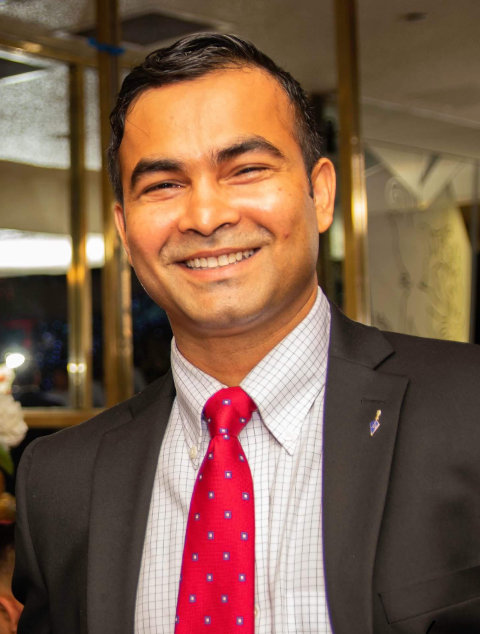
Mahmudul H. Bhuiyan is a Senior Electrical Engineer at Zebra Technologies, where he develops RFID reader products. Previously, he specialized in creating barcode scan engines for the advanced location and data capture technologies department. He has led the development of both next-generation RFID hardware and barcode scan engines. His prior experience includes developing high-voltage lithium-ion battery packs at Stanley Black & Decker, where he managed high-volume manufacturing and automated testing. Before that, at Honeywell, he focused on developing home security products, gaining expertise in signal integrity and IoT sensor integration. A proven innovator with six patents, Mr. Bhuiyan holds a B.S. in Electrical Engineering from the Rochester Institute of Technology. He also regularly volunteers for Habitat for Humanity.

Pratheik Ajit is an RF Systems Engineer at Zebra Technologies, where he contributes to RFID product development with a focus on RF front-end design, RFID systems, and overall electrical system architecture. Prior to joining Zebra Technologies, Mr. Ajit served as an RF Engineer at Drymax Solutions, a startup specializing in RF-based agricultural drying technology. During his tenure, he played a key role in the design and development of an innovative RF dryer system, for which he holds a U.S. patent.
Mr. Ajit holds a Master of Science in Electrical Engineering with a concentration in RF Engineering from the Rochester Institute of Technology (RIT), New York
Workshop #2: Cancelled
Workshop #3: Toward Scalable and Energy-Efficient Connectivity for 3GPP Ambient IoT via Bistatic RFID
Organizers: Jingyi Liao (Aalto University, Finland), Xiyu Wang (Aarhus University, Denmark), Riku Jäntti (Aalto University, Finland), Diana Pamela Moya Osorio (Linköping University, Sweden), Dinh-Thuy Phan-Huy (Orange Innovation, France), Han Zhu (University of Houston, USA)
Covered Topics:
The rapid expansion of the Internet of Things (IoT) demands scalable and energy-efficient connectivity for billions of low-power devices. The emerging Ambient IoT (AIoT) concept, currently under study by 3GPP, seeks to enable massive machine-type communications through backscatter technology operating in licensed cellular bands. Conventional CW-based approaches increase power consumption and system complexity, motivating new paradigms that exploit ambient cellular signals for bistatic or ambient backscatter communication. This session will highlight recent advances, challenges, and standardization efforts in AIoT design, with emphasis on ambient signal reuse, cross-layer optimization, and sustainable connectivity strategies toward realizing pervasive and energy-efficient IoT networks.

Patricia Bower joined HaiLa Technologies, Inc in 2023 to lead Product Management and commercialization of ultra-low power communications system-on-chips (SoCs) for ambient-powered devices and pervasive edge AI. Patricia has a diverse background in communications systems and both wireless and wireline semiconductors. Prior to HaiLa, she was Product Marketing Portfolio owner for optical communications subsystems at Ciena, delivering greater integration and power efficiency in high-speed data transmission for global networks and data center system architectures underpinning cloud-based AI technology. Patricia worked with teams relying on both standard CMOS and photonic integrated circuits driving new innovations. Before this, she was a product leader and strategist at Fujitsu Semiconductor and Socionext defining high-performance analog designs and advanced packaging solutions for optical and mobile network communications. Patricia also has a background in manufacturing process engineering, and materials engineering and test.
Workshop #4: RFID Jeopardy!
Organizer: Christopher Saetia (Georgia Institute of Technology, USA)
Covered Topics: History of RFID, RFID protocols, antennas and propagation, energy harvesting, reader design, backscatter communications, sustainability and safety, RFID localization and sensing, novel materials and devices for RFID, NFC RFID, RFID applications, IEEE RFID conference best papers and history
To celebrate the 20th anniversary of the RFID conference, a RFID trivia competition, in the style of the game show Jeopardy, will be held to test the attendees’ knowledge on general RFID and work presented at past RFID conferences! Participants will work in teams to be the first to answer presented questions. Scoring will work as in traditional Jeopardy where harder questions are worth more points, and teams can make wagers on specific questions and the final question. Question categories will include, but not limited to, backscatter principles, best RFID papers, antennas, protocols, etc. A prize will be awarded to the winning team. The purpose of this workshop is to get conference attendees socializing with each other and provide a fun activity to energize them and get their competitive spirits flowing after sitting through talks.

Christopher Saetia (Graduate Student Member, IEEE) received the B.S.E.E. and M.S.E.C.E. degrees from the Georgia Institute of Technology in 2022 and 2023, respectively, where he is currently pursuing the Ph.D. degree in electrical and computer engineering under the advisement of Dr. Gregory D. Durgin. His current research and technical interests range widely in the field of RF systems, including wireless-power transfer, next-generation RFID and backscatter communications, and wireless transceiver design. He was the recipient of the William C. Brown Fellowship in 2024 and the IEEE AP-S Fellowship in 2025. He has been actively involved in IEEE leadership since 2020. He has served as the President of the IEEE HKN Beta-Mu Chapter from 2021 to 2022. He has volunteered for different organizing committee roles for various conferences run by the IEEE Council on RFID, including IEEE RFID-TA in 2024, IEEE DTPI in 2025, and IEEE RFID in 2026. He is serving as the Current Vice-Chair of the IEEE Atlanta section’s AP/MTT Joint Chapter. Under his leadership, this chapter was awarded the best IEEE Atlanta section chapter in 2025 and had won the IEEE AP-S Education Initiative Program grant to organize and host a series of “RF basics” workshops. He is planning to become an assistant professor of engineering at Wake Forest University in Fall 2026.
Workshop #5: The ID in RFID
Organizers: Andrew Morehead (GS1), Claude Tetelin (GS1), Jonathan Gregory (GS1)
Abstract:
In this workshop, we’ll connect “what to encode” with “how it gets read,” so teams can make implementation decisions that scale and remain interoperable. Participants will learn how GS1 identifiers (like a GTIN) and optional data using GS1 Application Identifiers are represented in RFID tags via the GS1 EPC Tag Data Standard (TDS)—including the distinction between data-carrier-neutral representations (e.g., URIs) and the RFID-specific binary EPC encodings. We’ll also cover how the TDS is improving alignment between RFID and 2D barcodes, including support for streamlined encoding, improved translation via Tag Data Translations (TDT), and new capabilities introduced in TDS 2.3—most notably the ability to encode a host name directly on the tag. This helps expand use cases with newer EPC schemes (like SGTIN+ and date-prioritized DSGTIN+) to improve interoperability with GS1 barcodes and support efficient capture of additional data like dates, lot/batch, and country of origin directly during inventory operations. Attendees will leave with a shared vocabulary, and a standards-aligned approach to planning RFID deployments.

Andrew Morehead serves as the Global Standards Director for GS1 US. He brings extensive expertise in helping businesses of all sizes accelerate innovation and unlock growth through GS1 Standards. At GS1 US, he has spent over three years guiding established businesses and emerging brands on how to leverage data and technology for supply chain efficiency, interoperability, and transparency.
A frequent speaker at industry events such as Pack Expo, Startup CPG and GS1 Connect, Andrew is passionate about simplifying complex supply chain challenges and enabling scalable solutions that drive business success. His collaborative approach and deep knowledge of Automatic Identification and Data Capture (AIDC) technologies position him as a trusted resource for organizations seeking to improve traceability and operational performance.
Please, stay tuned as more workshops will be announced!
Christopher Saetia – IEEE RFID 2026 Workshop Chair
Alessandro Cattaneo – IEEE RFID 2026 General Chair
Riccardo Colella – IEEE RFID 2026 General co-Chair